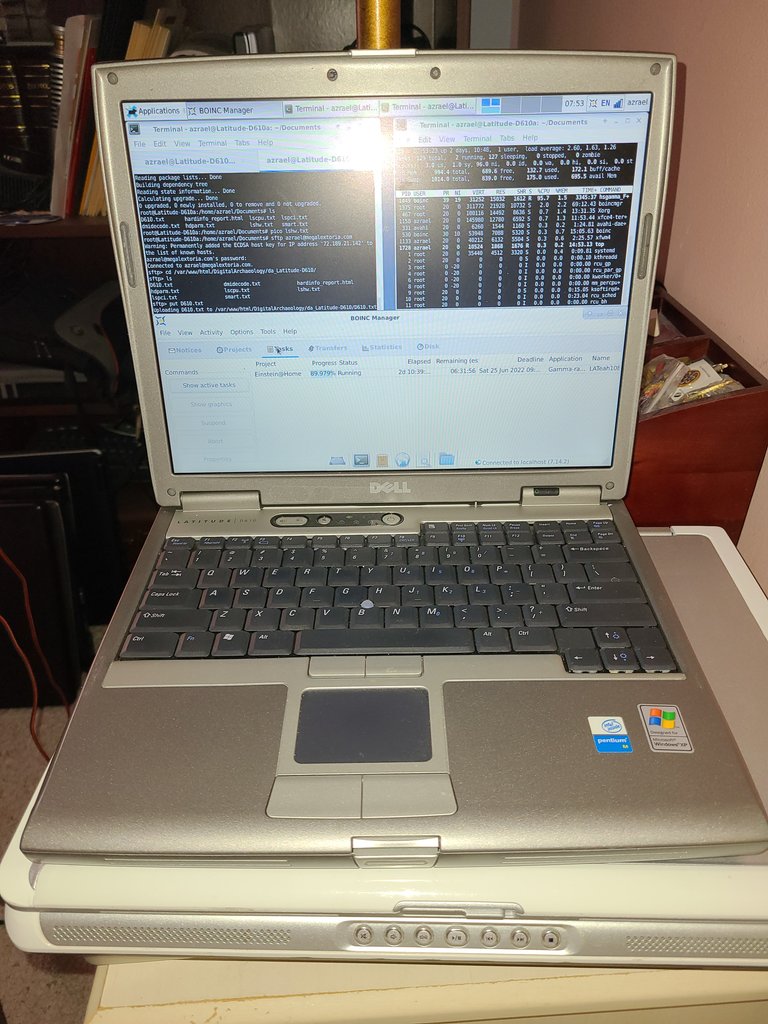
The Dell Latitude D610 is a Pentium M based laptop that was a slight upgrade to the D600.
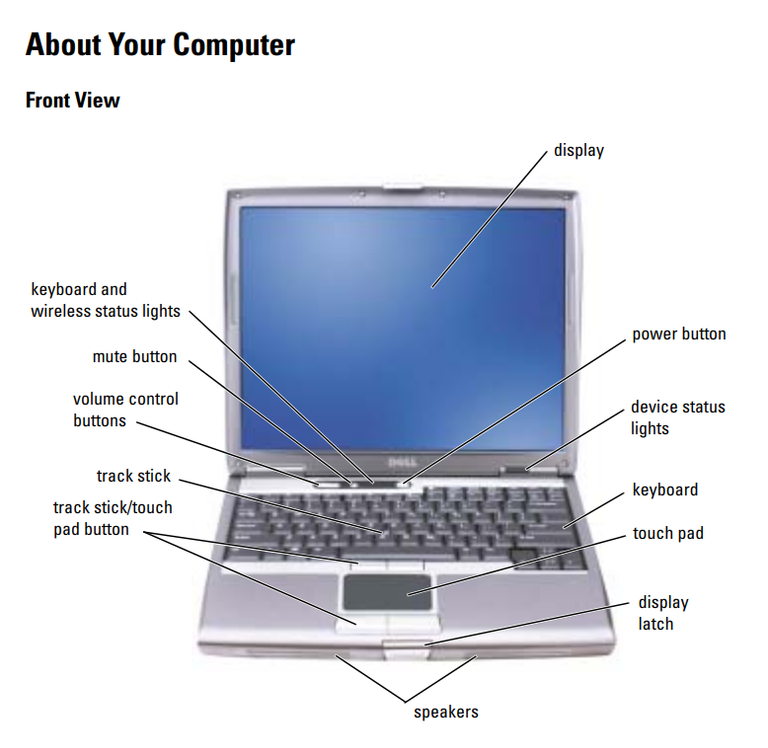
Some improvements over the D610 had over the D600 were a sturdier chassis thanks to a more solid frame, moving from the 855 chipset to a 915 based chipset, DDR2 RAM vs. DDR, and faster processor and graphics options.
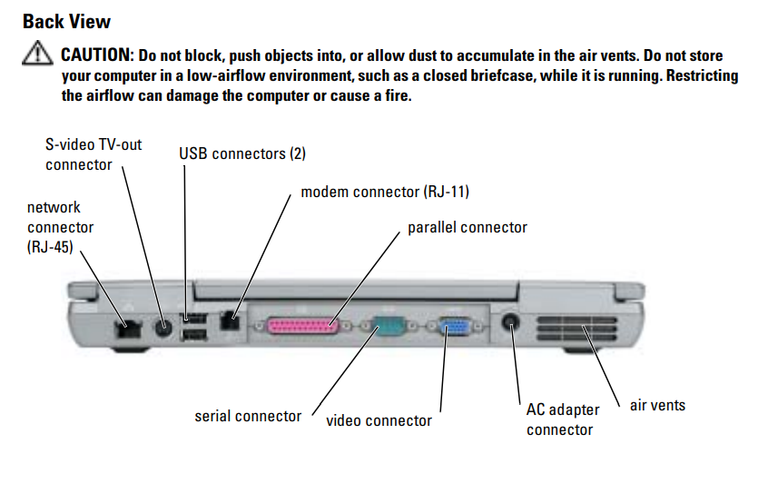
This particular D610 seems to be one of the lower end version in that it is using the integrated Intel graphics version of the motherboard and only has a 1024x768 display. Specs include:
- CPU: Pentium M 740 @ 1.73 GHz
- Graphics/Chipset: Intel 915GM
- Memory: 1 GB DDR2 533MHz
- Display: 14.1" @ 1024x768
- Hard Drive: Hitachi DK23FA-6 60 GB Ultra-ATA 10 4200 RPM
For more detailed specs, see the output of Hardinfo here.
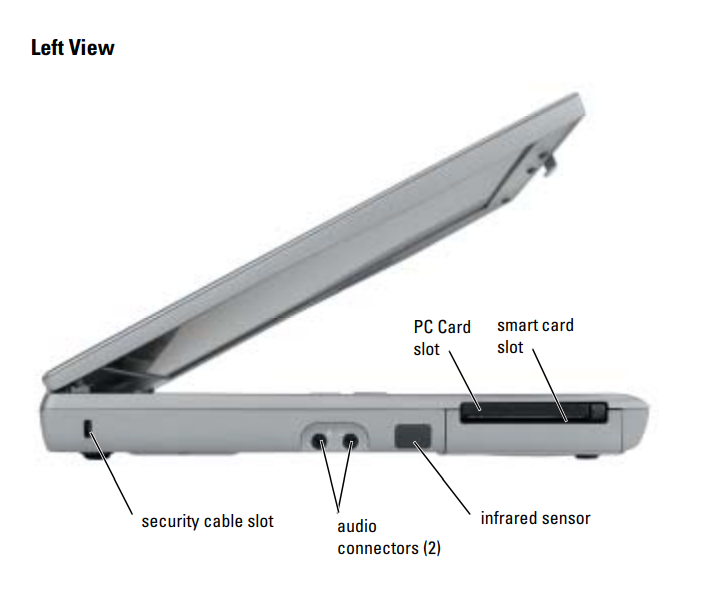
There were two basic variants of the Pentium M. The first, code named Banias, featured a 130nm process and 1MB of cache. The second, code named Dothan, feauted an 90nm process and 2MB of cache. Both variants came in various speeds and had processors that ran on a 400 MT/s bus and 533 MT/s bus. The Pentium M 740 in this laptop is a "Dothan" variant, runs at 1.73 GHz with a 533 MT/s bus.
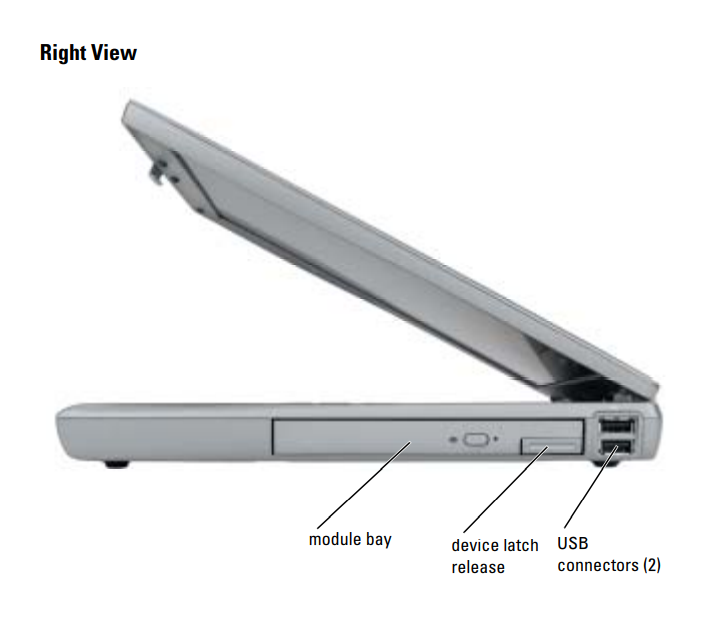
The Intel 915GM chipset includes PCI Express capability, support for DDR2, support for a 533 MHz FSB and updated Intel graphics.
This laptop is somewhat upgradeable. The most immediately useful upgrade would probably be to max out the RAM at 2 GB. The processor could also be upgraded. The fastest Pentium M, the 780 @ 2.27 GHz will work but may run a bit warm. An SSD or even just a faster mechanical hard drive would probably make a pretty big difference in speed as well.

This laptop was designed with Windows XP in mind and that is probably still the best version of Windows for this machine. If you want a more modern OS, then Debian seems to work fine and Debian is perhaps the only major Linux distribution still doing 32-bit releases..
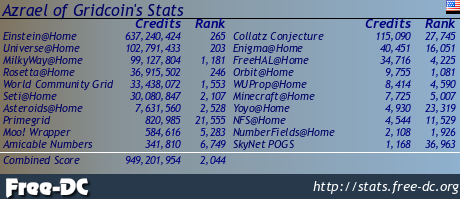
Like all of the computers that pass through my hands (at least the ones that are capable), I run BOINC on this laptop. Of the projects I participate in, this machine has gotten work units for Einstein@home and MilkyWay@home. It has also gotten tasks from World Community Grid but that project has been down for a while now. Many projects don't support 32-bit CPUs these days. You can also check out its BOINC stats on BOINCStats or Free-DC.
Read more: https://www.megalextoria.com/wordpress/index.php/2026/05/26/digital-archaeology-dell-latitude-d610/
Check out my other Social Media haunts:
Wordpress: https://www.megalextoria.com/wordpress
Tumblr: https://www.tumblr.com/blog/darth-azrael
Blogger: https://megalextoria.blogspot.com/
Blue Sky: https://bsky.app/profile/darth-azrael.bsky.social
Odyssee: https://odysee.com/@Megalextoria:b
Rumble: https://rumble.com/c/c-2385054
Daily Motion: https://www.dailymotion.com/Megalextoria
Books I am reading or have recently read:
Harry Potter and the Chamber of Secrets by J.K. Rowling.
Thomas Cromwell: A Revolutionary Life by Diarmaid MacCulloch.
Harry Potter and the Sorcerer's Stone by J.K. Rowling.
Mine Monero in your browser!
Earn Gridcoin while also helping various scientific projects by sharing your computer's idle CPU time!
This post has been shared on Reddit by @jlinaresp through the HivePosh initiative.
One of my all time favorite netbooks I owed was the once famous EEEPC Notebook.
It seemed like netbooks were popular for like 5 minutes. I guess larger smart phones and tablets took their place. I always preferred the netbook form factor though. Especially having a keyboard and better OS options.
I sort of disagree, I think netbooks took over for good. The first issue is that Microsoft fought tooth and nail against these systems because they didn't carry Windows. So they force manufacturers to switch to windows even if the hardware was slow, also other manufacturers jump into schools with the XO and the Intel proposition. Finally the hybrid computers started coming out, and right now they still have the surface and most tablets still have the netbook stage of a tablet being used like a netbook. Even the DEX from phones also feel like a netbook idea inspiration.
Even the Google Chromebook was also an interation of the netbook idea and the Intel NUC which eventually became Smart TVs as computers.
It depends on how you define netbook i guess but to me to be considered a "netbook" it has to have the following features:
The surface is too expensive. The largest phones are a bit too small and dont have a physical keyboard. Tablets and phones traditioanlly run a more cut down and locked down OS and the keyboard would be a separate thing.
The smaller chromebooks are are the closest modern day equivalents. Chrome OS almost disqualifies them but i believe you can install another OS if you want. Unless they've started locking them down... I haven't used one recently.
My definition of netbook is closer to what was the idea of the 'web appliance'. Inexpensive accesible devices that focus on get you online. It reminded me of this device which only do email (see picture). Hence the name (inter)net-book. Or what now we have as Google Nest or Amazon Dot. So running a proper OS is sort of ok only because Linux made it possible. But like I said, Windows wasn't part of the plan, Microsoft just threw money and threats to the manufacturers to get the specs up to where windows was possible. Because trying to push Windows Mobile (from their pocket pc line) resulted in a disaster.
Curated! Thanks for using Ecency!
Update: @darth-azrael, I paid out 0.426 HIVE and 0.000 HBD to reward 1 comments in this discussion thread.
https://bsky.app/profile/did:plc:ggtlieencodejd6phc7m3ea7/post/3mm6kcmfzrs2y
https://bsky.app/profile/did:plc:ggtlieencodejd6phc7m3ea7/post/3mm6kcmfzrs2y
The rewards earned on this comment will go to the author of the blog post.